At E-Maison, we recognize that children learn not only from their peers and educators but also from their surroundings. Therefore, our indoor and outdoor learning environments have been thoughtfully planned to maximize exploration and engagement. Each space is crafted to inspire wonder and curiosity, with an emphasis on natural elements that connect children to the environment around them.
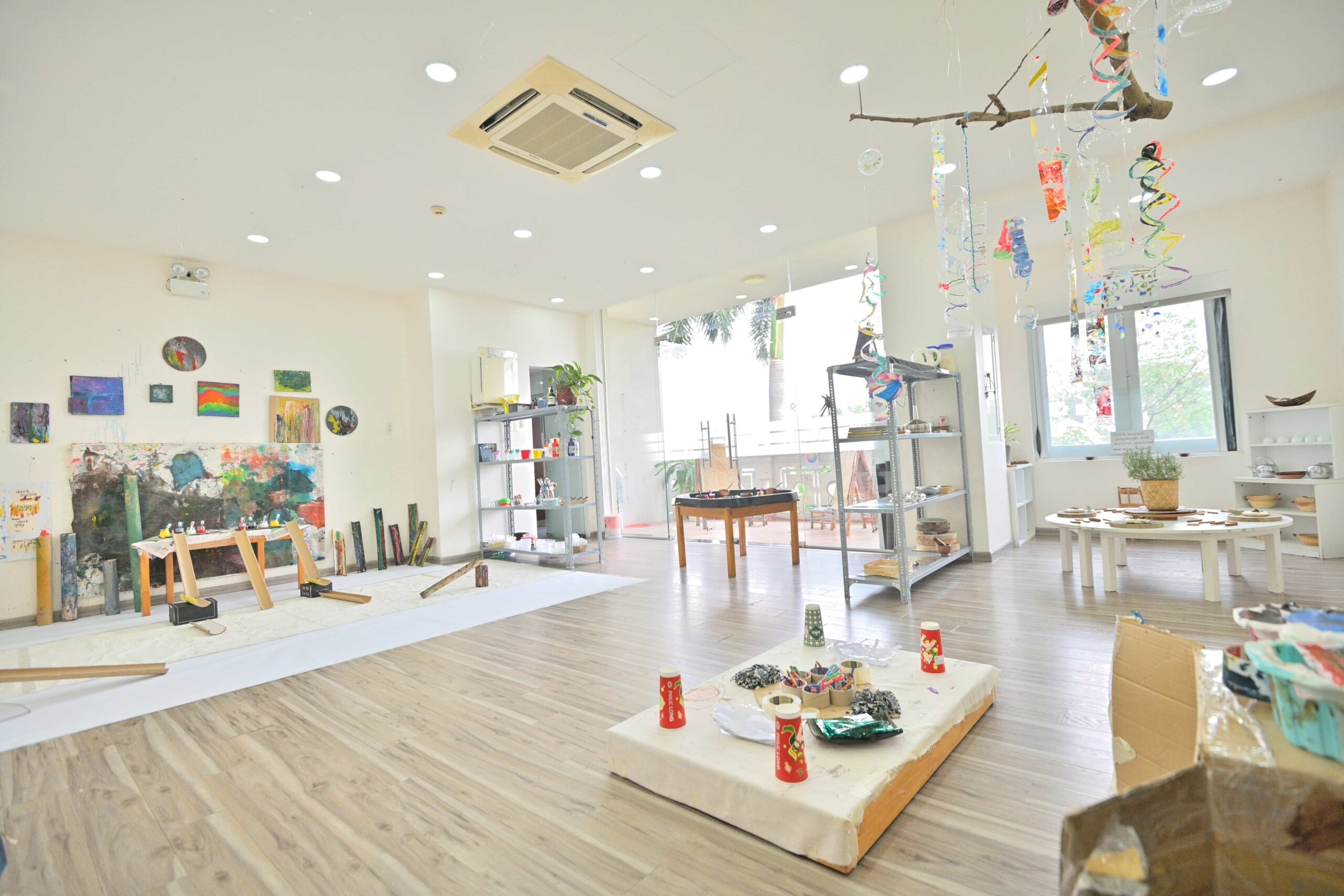
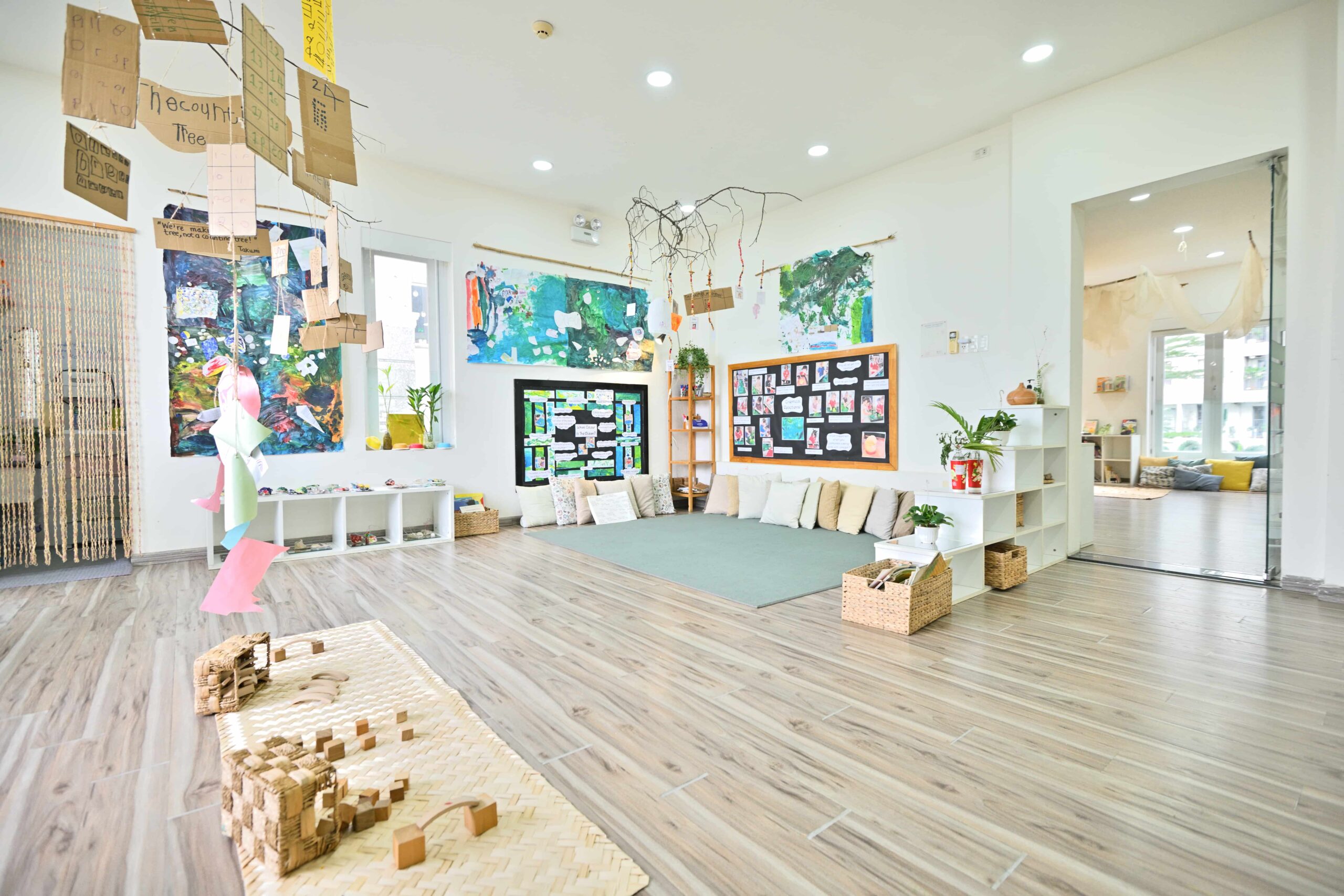
At E-Maison International Pre-School, our indoor learning spaces are thoughtfully designed to be nature-inspired, featuring an abundance of large windows that invite natural light to flood in. This connection to the outdoors not only brightens the environment but also creates a calming atmosphere, fostering a sense of well-being and encouraging deeper engagement in learning experiences.
Children are provided with diverse opportunities to engage in play that integrates all areas of development.
Each aspect of our indoor learning environment is crafted to inspire engagement and encourage children to take an active role in their learning. By offering a wide variety of play-based experiences, E-Maison International Pre-School ensures that children develop holistically, building essential skills and fostering a lifelong love of learning.
Our carefully curated environments allow for deep and rich exploration through the 100 Languages of Children:
The Language of Maths and Science
Mathematical and Scientific concepts are deeply rooted in hands-on exploration and interactive provocations. Maths and science are not just subjects to be taught but languages through which children can express their understanding of the world around them. In our carefully arranged learning spaces, children engage with a variety of materials, including natural objects, measuring tools, and sorting games, which encourage them to investigate mathematical concepts such as counting, measuring, and pattern recognition. Interactive provocations, such as open-ended questions or challenges, spark curiosity and encourage children to hypothesize, test, and draw conclusions from their observations. This inquiry-based approach aligns with the Reggio philosophy of viewing children as capable and competent learners who construct their own knowledge through active exploration.
The Language of Graphics
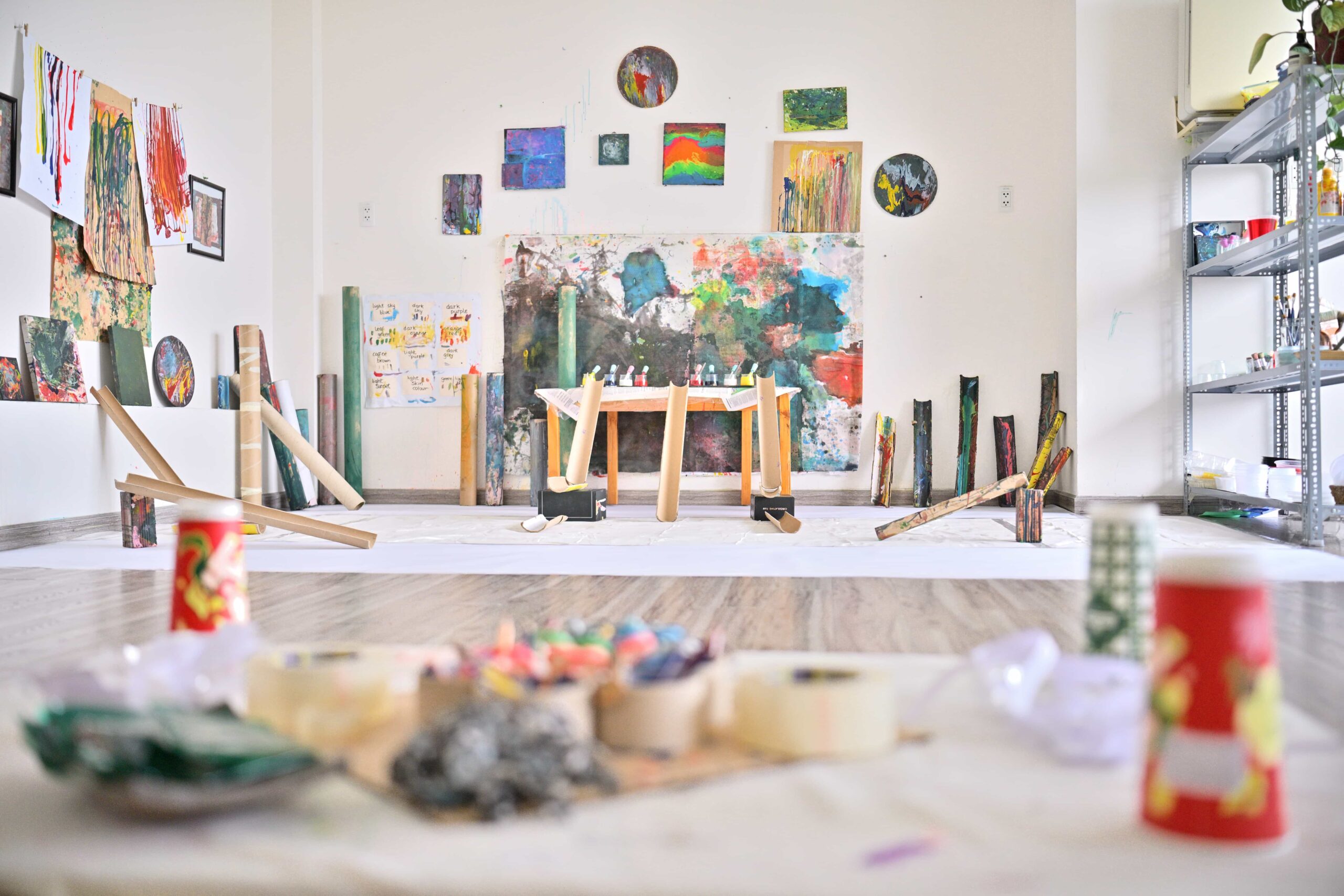
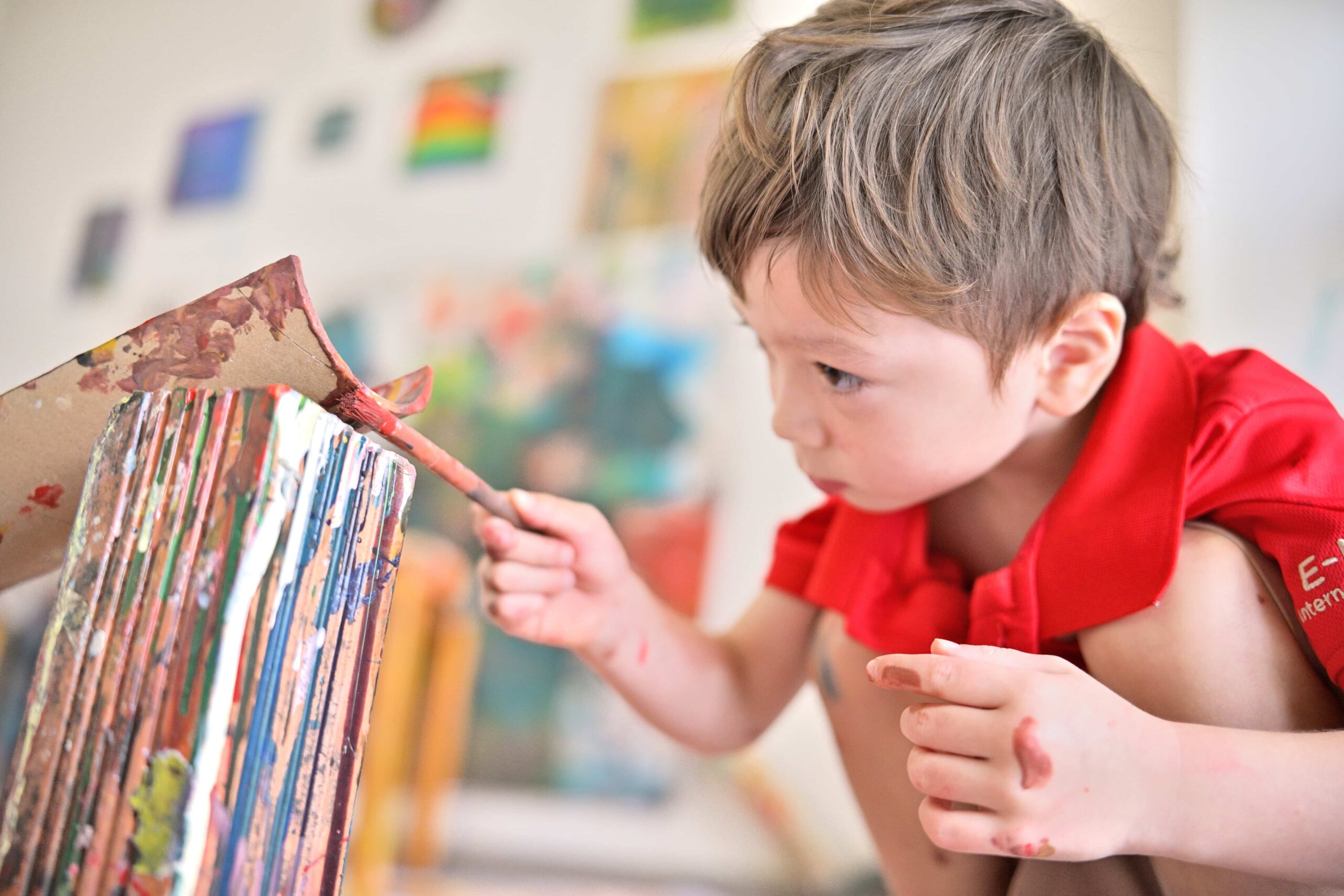
In our Graphic Atelier, we provide a vibrant and inviting space filled with diverse materials and resources that ignite creativity. Here, children are encouraged to express themselves through various forms of graphic art. The atelier is designed for exploration, allowing young artists to experiment with different textures, colors, and techniques. This open-ended environment fosters not only the development of artistic skills but also enhances self-expression and critical thinking. As children engage in their creative processes, they learn to communicate their thoughts and feelings, explore their imagination, and build confidence in their abilities.
The Language of Literacy and Mark-Making
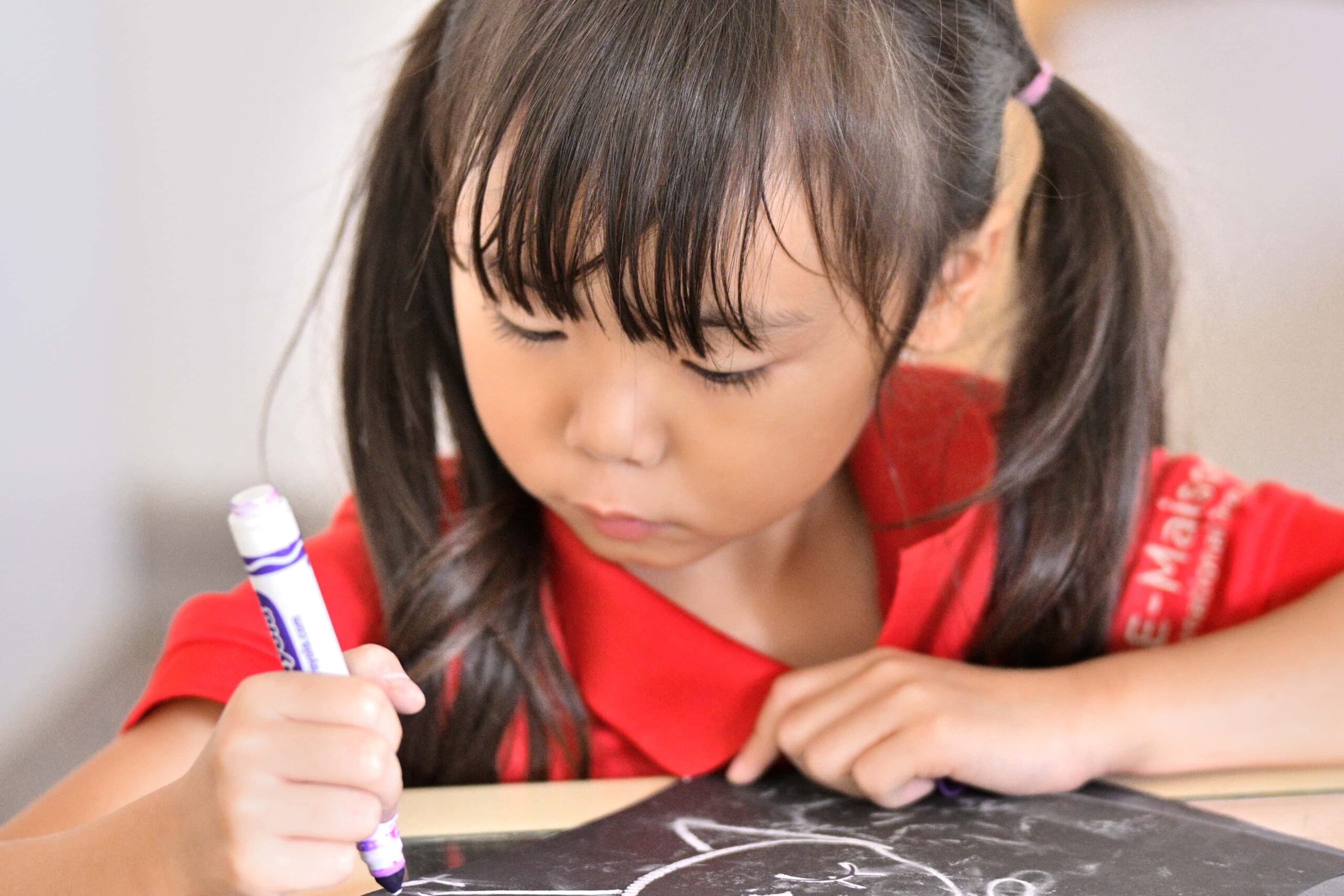
Our cozy reading nooks are thoughtfully designed to invite children into the enchanting world of stories, fostering a deep love for literature. These inviting spaces encourage young readers to explore books and narratives at their own pace, sparking imagination and curiosity. In addition, our mark-making (writing) stations are equipped with a diverse array of materials, offering children numerous opportunities to develop their writing and communication skills. Mark-making for purpose and communicating ideas, allows children to develop a strong sense of identity and intention with communicating their ideas. Whether engaging in structured experiences or expressing themselves spontaneously through play, children can enhance their literacy skills in a supportive environment.
The Language of Dramatic Play
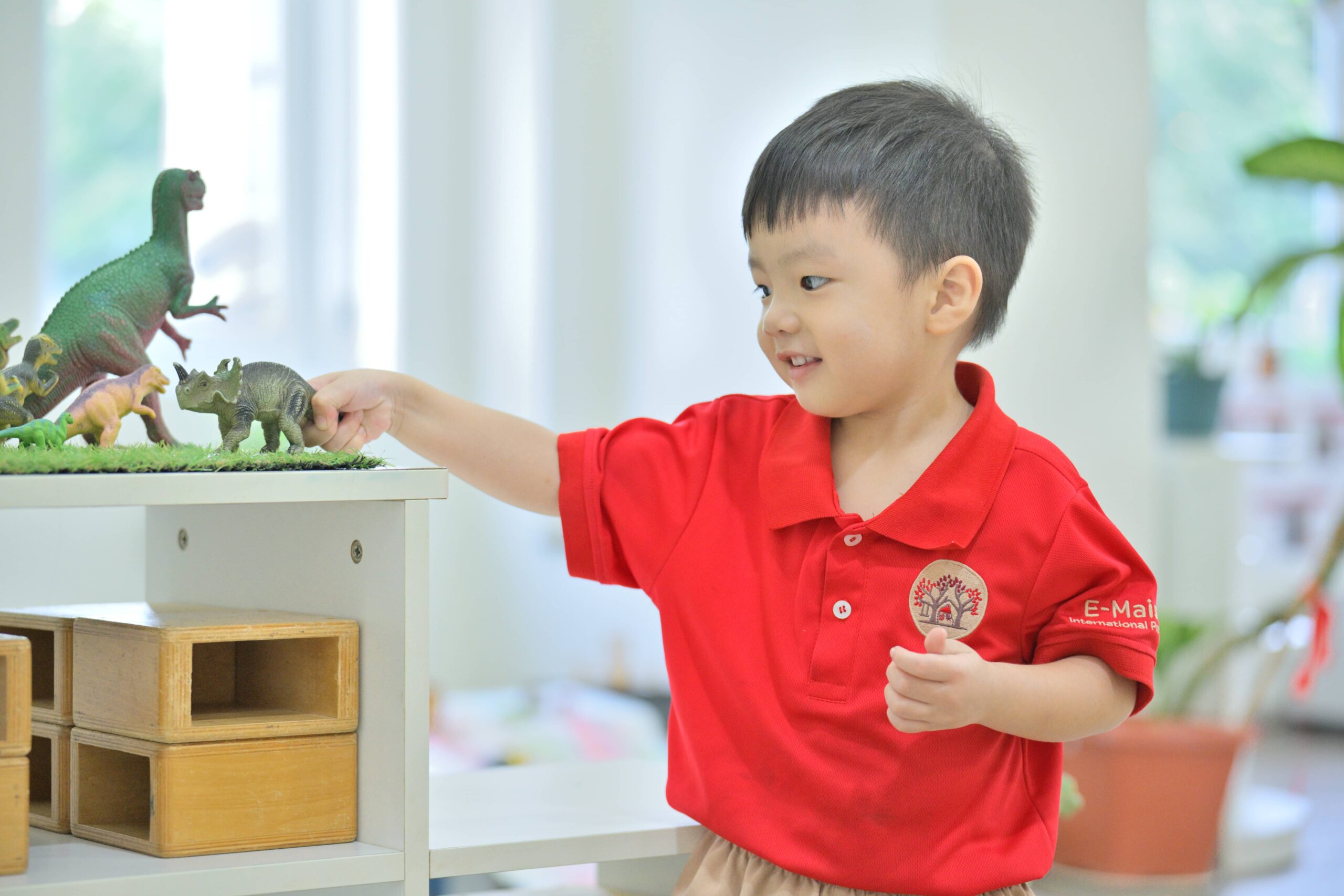
Children are empowered to explore various social roles and narratives, providing a rich platform for enhancing their communication skills and emotional intelligence. This interactive space through stages and family kitchens invites young minds to engage in imaginative play, offering them the freedom to act out stories, experiment with dialogue, and simulate real-life scenarios. As children immerse themselves in role-playing, they learn to navigate social interactions, collaborate with peers, and negotiate various perspectives. Through dramatic play, children explore complex emotions and experiences, gaining a deeper understanding of themselves and others.
The Language of Construction
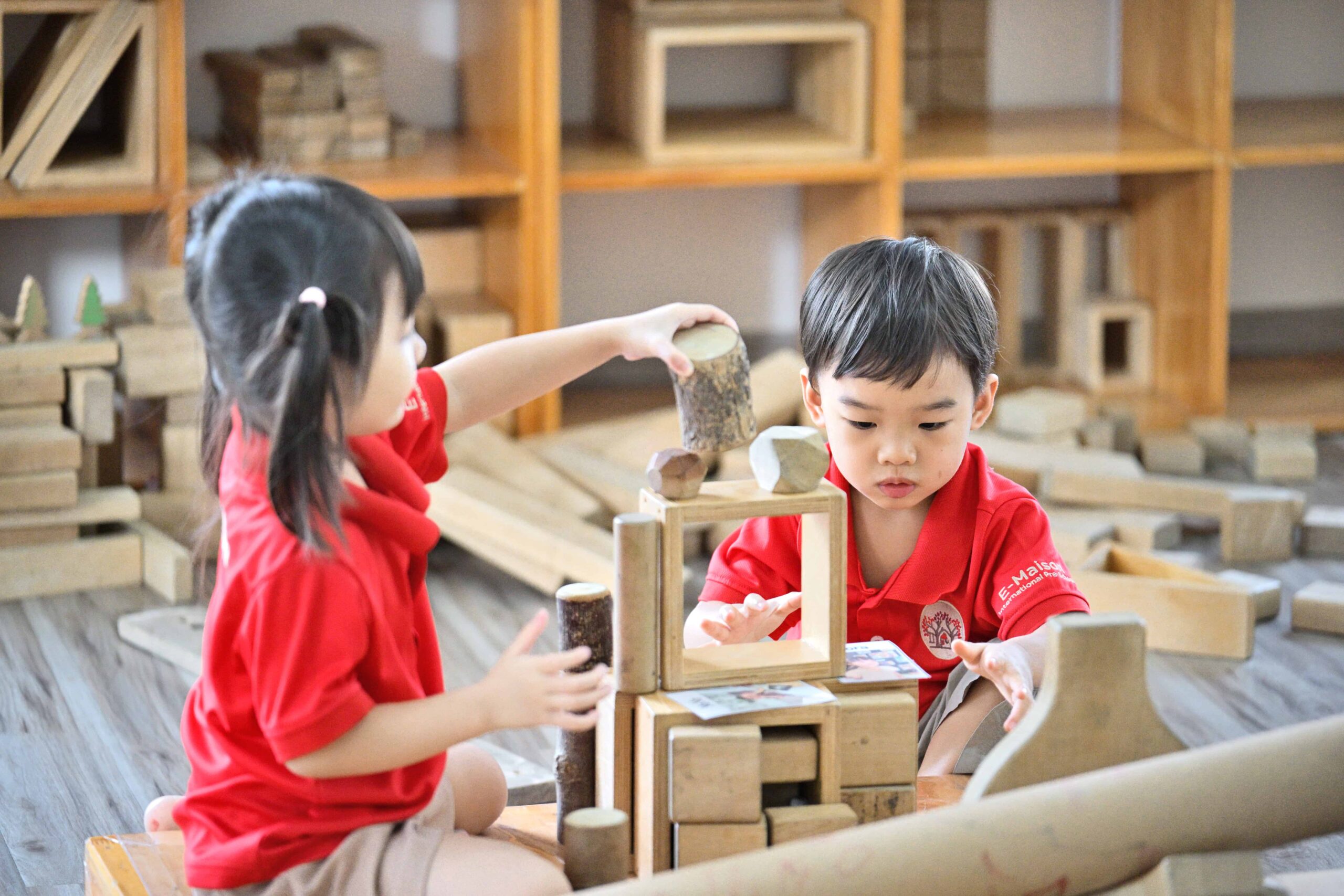
The Construction Corner serves as a vibrant hub of creativity and collaboration. Here, children are encouraged to unleash their imagination using a variety of materials such as blocks, cardboard, and natural elements. This dynamic space fosters hands-on exploration, allowing young builders to experiment with concepts of balance, structure, and design. As children engage in collaborative projects, they develop critical thinking and problem-solving skills while negotiating roles and sharing ideas with their peers. The Construction Corner not only nurtures their understanding of engineering principles but also enhances social interaction and communication. Through their creations, children express their visions and connect meaningfully with their learning environment, embodying the essence of research and discovery.
The Language of Touch
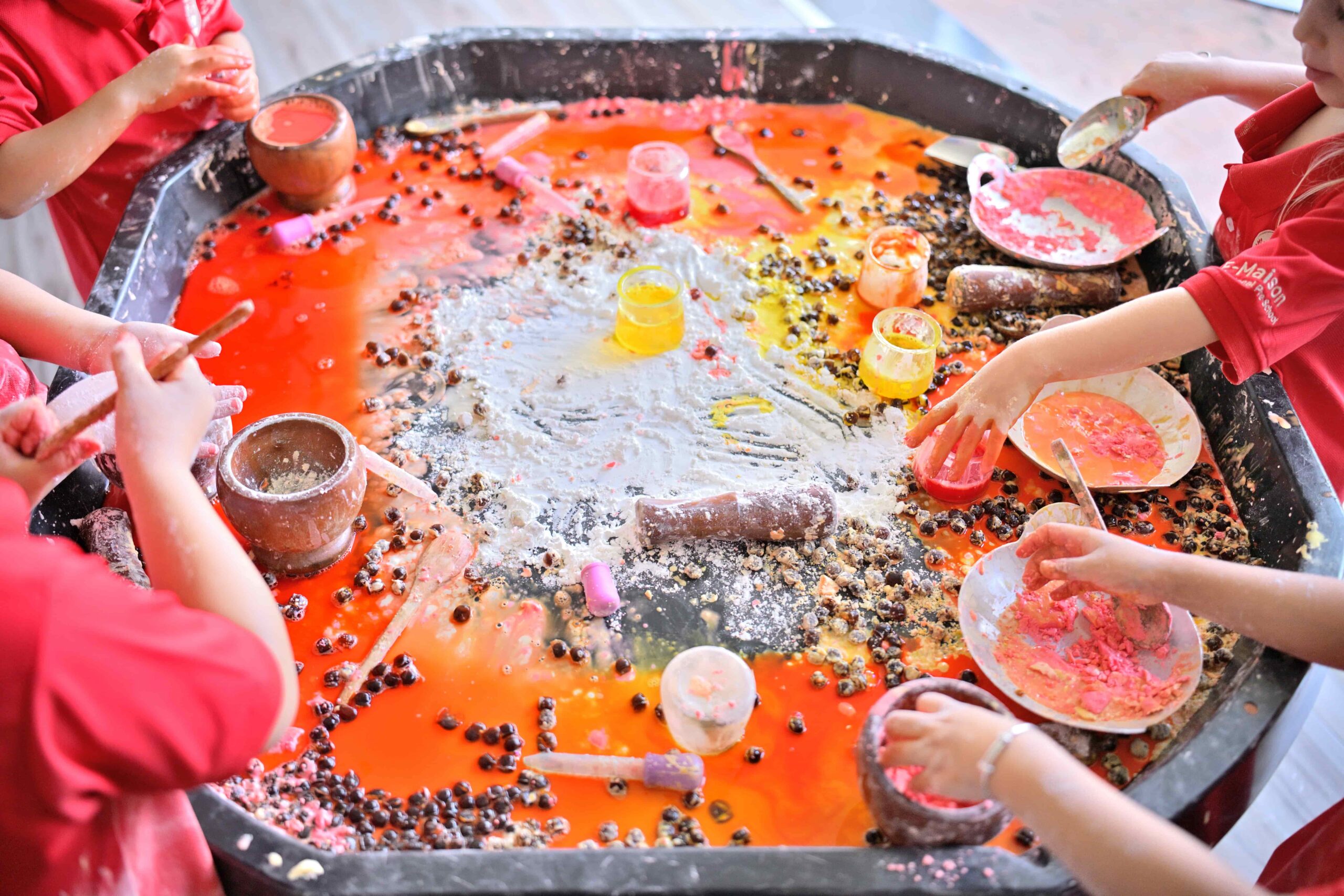
In our indoor spaces, sensory trays serve as an invitation for children to ground themselves, as they explore a variety of textures, colours, and materials, engaging their senses and fostering a deeper understanding of the world around them. These hands-on experiences allow children to investigate concepts such as shape, weight, and volume while promoting fine motor skills and sensory awareness. As they manipulate and interact with different materials, children engage in meaningful play that sparks creativity and curiosity.
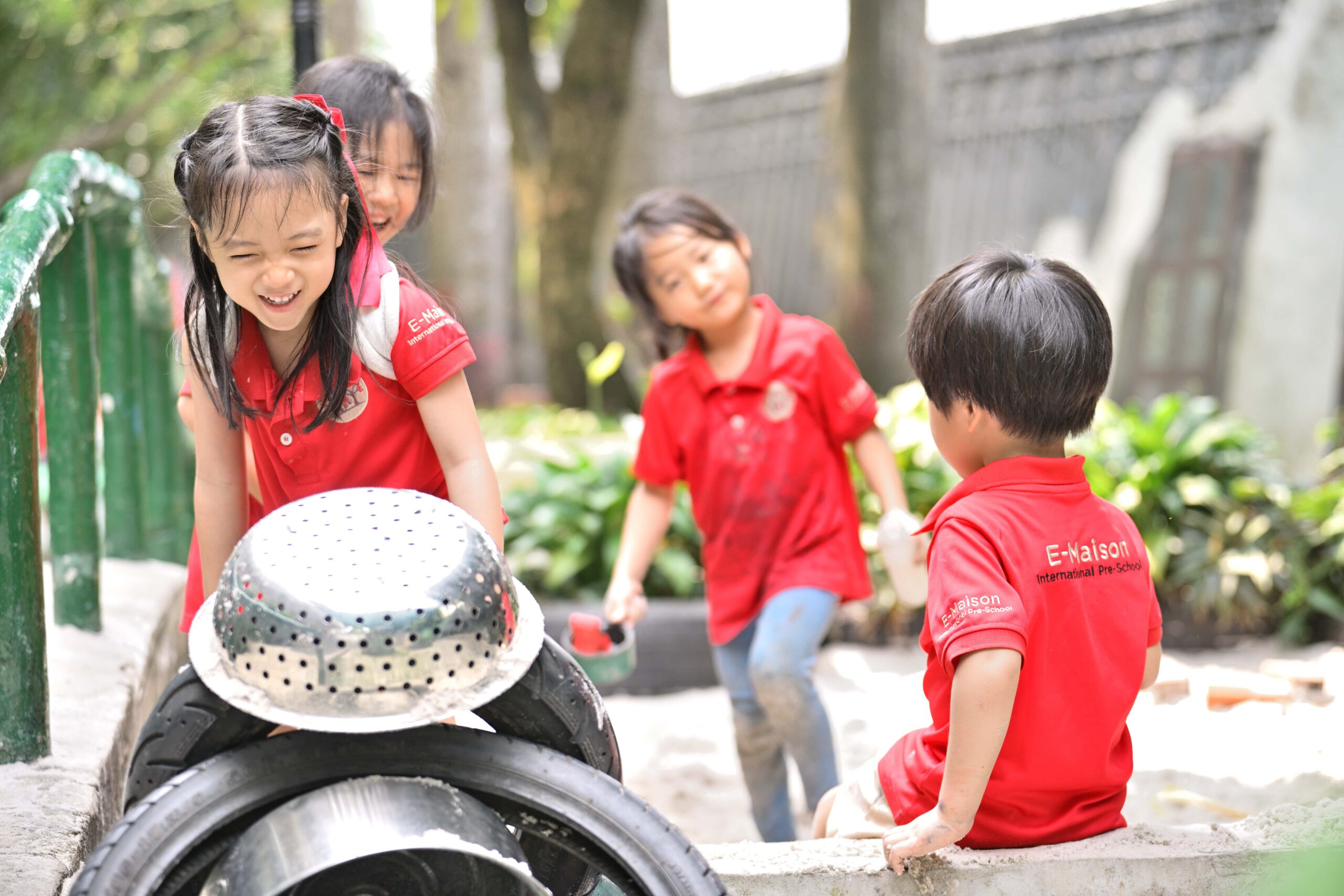
In an increasingly digital era where screens dominate daily life and sedentary habits are on the rise, E-Maison International Pre-School prioritises daily time in the garden as a vital antidote to promote active, healthy lifestyles among young children. By immersing them in outdoor exploration – whether tending to plants, engaging in sensory play with natural elements, or participating in unstructured physical activities – we encourage movement, boost physical fitness, and reduce the risks associated with prolonged inactivity, such as obesity and developmental delays. This intentional connection to nature not only combats sedentary behaviours but also nurtures emotional well-being, creativity, and a lifelong appreciation for the environment
The Language of Nature
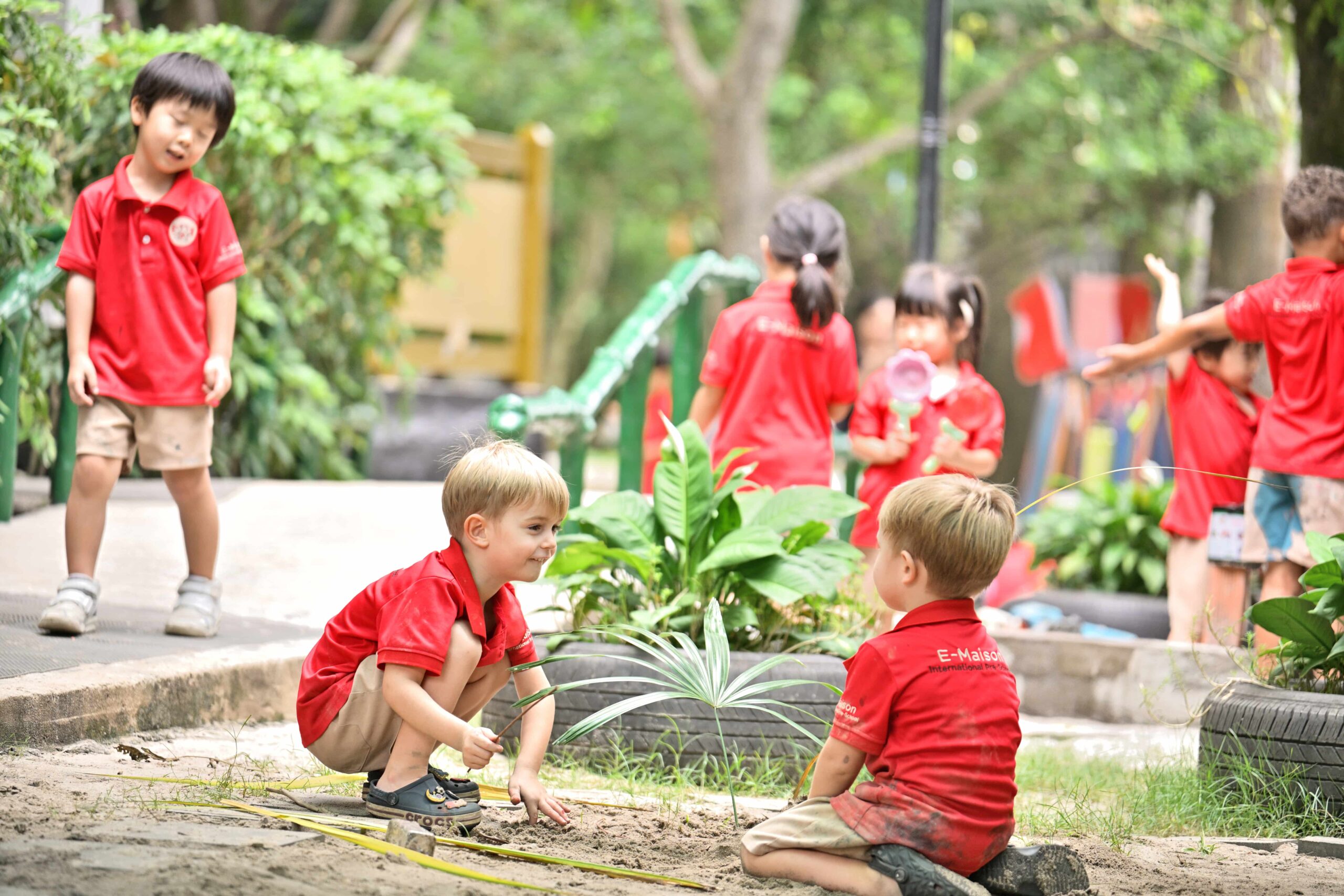
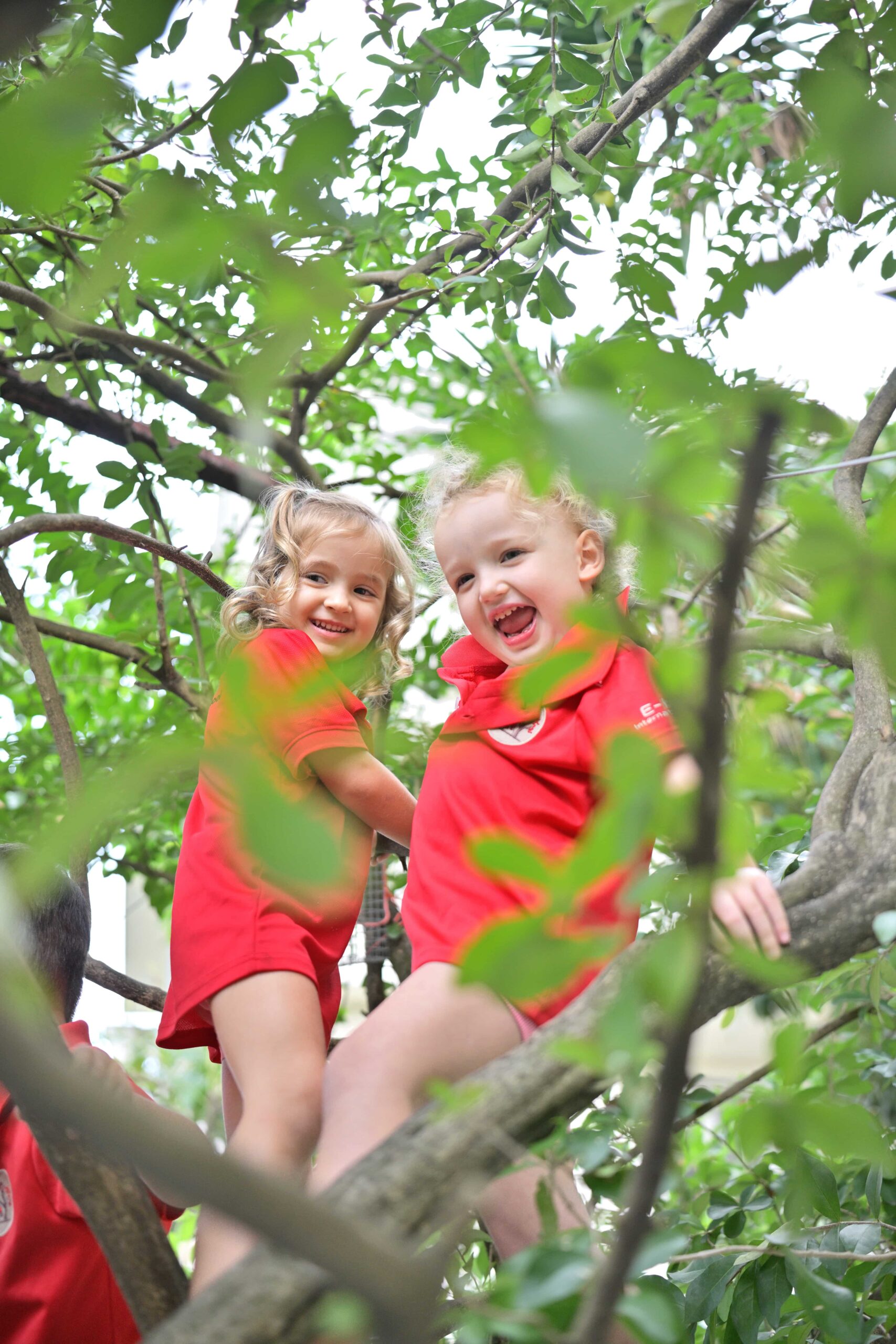
We embrace nature as a fundamental aspect of our learning environment. The outdoors serves as both a classroom and a source of inspiration, providing limitless opportunities for exploration, discovery, and connection. Children engage with the natural world through hands-on experiences that stimulate their curiosity and foster a deep appreciation for the environment. Through the Language of Nature, children learn to respect and care for their environment, developing a sense of stewardship and responsibility for the world around them. By incorporating nature into our curriculum, we instil in children an understanding of interconnectedness – how they, as individuals, are part of a larger ecosystem.
The Language of Water
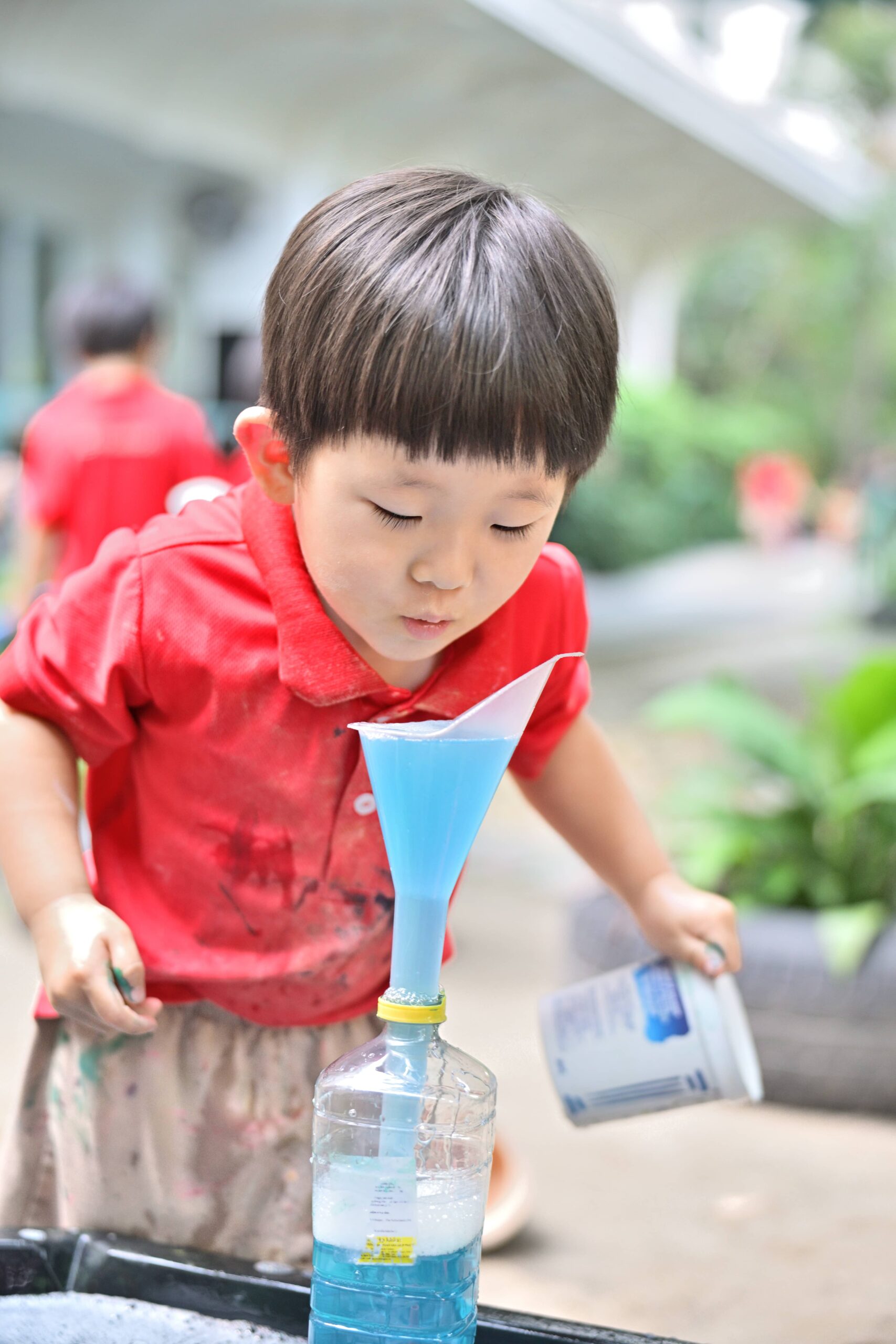
Water invites children to explore the dynamic and sensory qualities of this essential element through playful, hands-on experiences. Water play serves as a powerful medium for learning, stimulating curiosity and fostering cognitive development as children experiment with pouring, splashing, and observing flow, buoyancy, and transformation. This form of play enhances fine motor skills and hand-eye coordination while encouraging scientific inquiry, such as understanding cause and effect or basic physics concepts like volume and density. Emotionally, it promotes relaxation and emotional regulation, providing a soothing outlet for expression and stress relief. Socially, collaborative water activities build teamwork and communication as children negotiate shared resources and ideas.
The Language of Sand
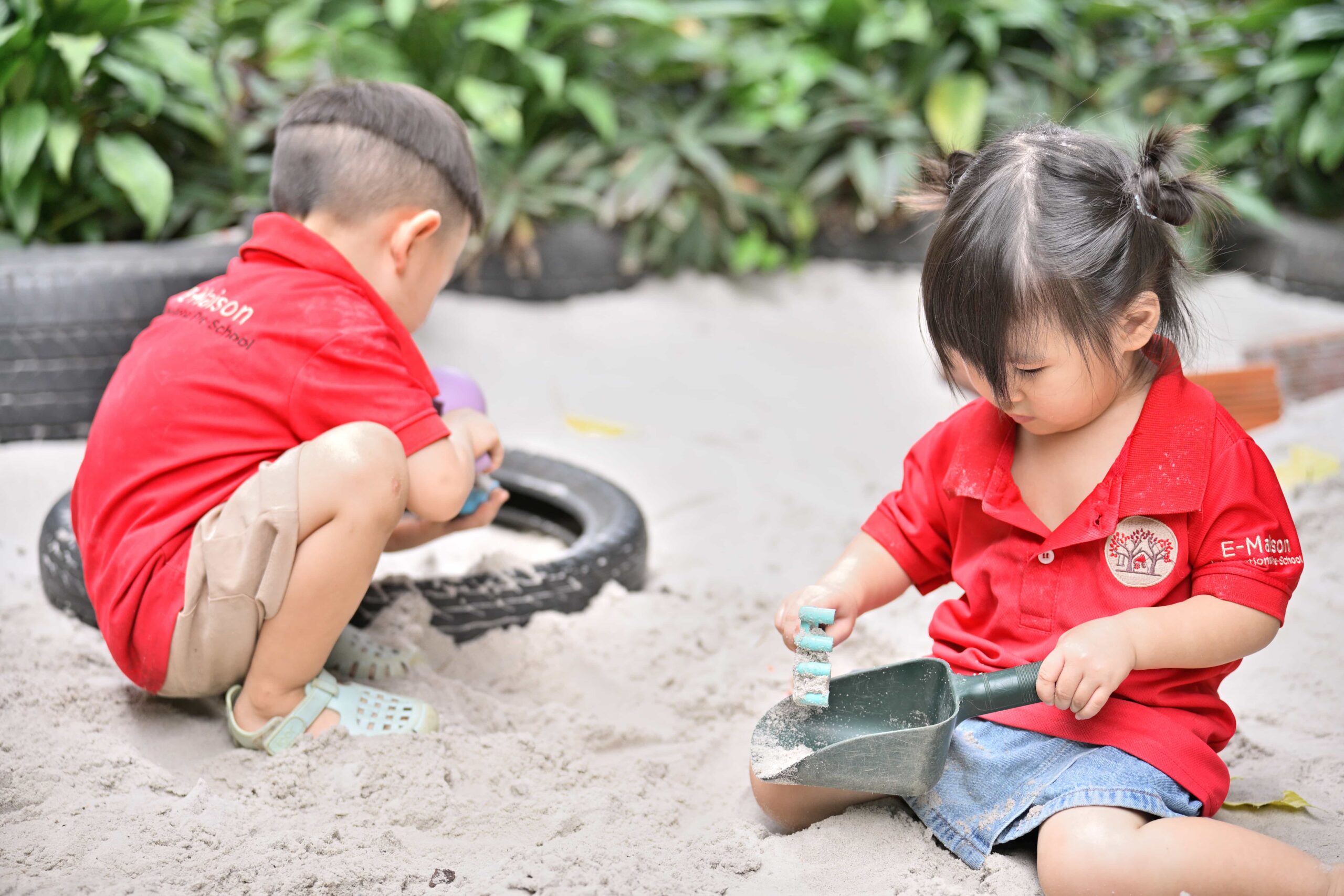
Working with sand offers children a tactile and versatile medium for discovery and expression, with an emphasis on sensory-rich experiences. Sand play fosters cognitive growth by encouraging experimentation with concepts like texture, volume, and transformation, as children dig, build, and mould, honing their understanding of physics and spatial relationships. It enhances fine motor skills and hand-eye coordination through activities such as sifting, pouring, and sculpting, while promoting creativity and imaginative storytelling in an open-ended environment. Emotionally, it provides a calming, therapeutic outlet for self-regulation and sensory processing. Socially, collaborative sand projects build cooperation and communication skills as children negotiate shared spaces and ideas. This natural element not only connects children to the earth but also cultivates problem-solving abilities and a profound sense of wonder, supporting holistic development in alignment with our child-centred philosophy.
The Language of Large Loose Parts
Large-scale materials, such as giant blocks, logs, and crates, invite open-ended exploration, allowing children to construct, modify, and design their own spaces and structures. At E-Maison International Pre-School, we offer children large loose parts as a dynamic and engaging way to explore creativity, engineering, and collaborative play. These materials encourage problem-solving and critical thinking as children experiment with balance, stability, and spatial awareness. The versatility of these materials fosters imaginative play, enabling children to transform their ideas into reality, whether they are building forts or staging imaginative games. Socially, working with giant loose parts encourages cooperation and communication, as children negotiate roles, share tools, and collaborate on projects. This interactive process strengthens their social skills and helps develop empathy and respect for others.